
Most receiving problems are created before the truck leaves the shipper. A pallet arrives without a reference the warehouse recognises, the count on the bill of lading differs from the notice, or the load leans over the pallet edge and must be rebuilt before it can be stored. Each of these issues can delay the unload, extend driver waiting time or require extra handling.
This checklist is for shippers, importers and freight brokers sending palletised freight to a Miami-area warehouse for pallet storage, cross-docking or freight staging. It explains what the receiving team needs, which industry standards are worth knowing, and how to record problems at delivery. It is general operational guidance, not legal or customs advice.
Send an inbound notice before the truck is dispatched
An inbound notice (sometimes called an advance shipping notice or ASN) tells the warehouse what is coming and how it should be received. It does not need to be an EDI message; a clear email or form is enough for many shipments. What matters is that every detail can be checked against the freight and its paperwork.
| Include | Why the warehouse needs it |
|---|---|
| Your reference, PO or booking number | Links the delivery to your account and instructions at the dock |
| Carrier, PRO or tracking number and expected arrival | Allows the delivery to be matched to an appointment |
| Pallet count, dimensions and weight per pallet | Shows whether pallets can be put away as built or need attention |
| Commodity, SKU or lot details and cartons per pallet | Supports the count and any later release by SKU or lot |
| Hazardous material status and special handling | Must be agreed before dispatch, not discovered at the door |
| What happens next: store, cross-dock or stage | Determines where the freight goes after unloading |
If the freight includes hazardous materials, say so before booking. Hazardous materials offered for transport are generally subject to the shipping-paper rules in 49 CFR Part 172, Subpart C, and a warehouse may need to confirm whether it can accept the goods at all.
Book the delivery inside receiving hours
A booked appointment protects both sides: the dock team can plan labour and door space, and the driver knows when the freight will be unloaded. Ask the carrier to arrive within the agreed window and to call ahead if delayed.
3PL Prime in Medley is open Monday to Friday, 08:00–16:00, and closed at weekends, so deliveries should be booked within those hours. A truck dispatched to arrive on a Saturday, or late on a Friday afternoon, should be rescheduled before it leaves rather than at the gate. Confirm the appointment in writing and give the carrier the warehouse reference that should appear on its paperwork. How you book depends on how the freight travels: see LTL vs FTL inbound deliveries.
Build pallets that can be received without rework
The receiving team checks whether each pallet can be moved, stored and later shipped safely as built. A few practical rules prevent most rework:
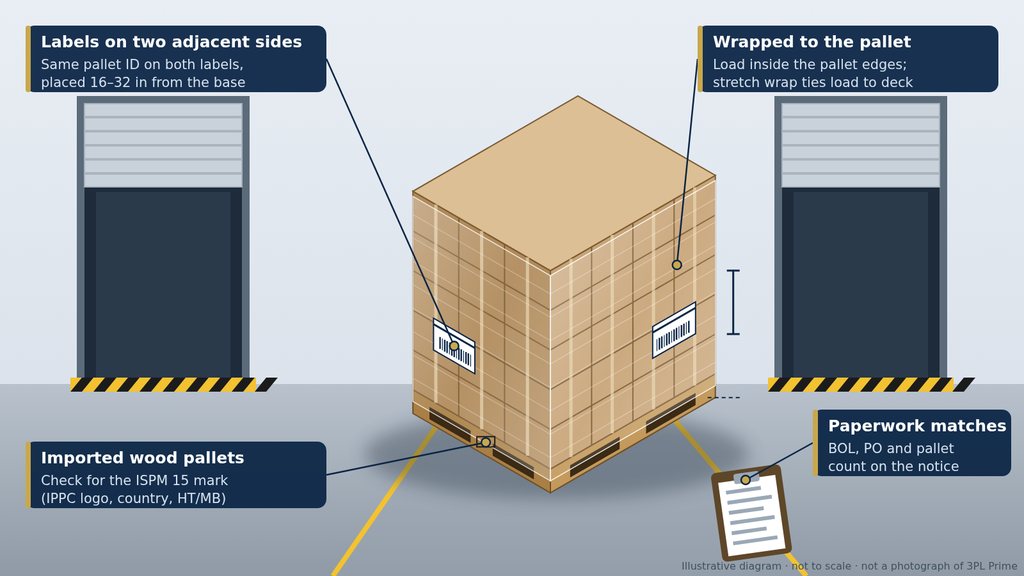
- Keep the load inside the pallet footprint. Cartons that overhang the deck are more likely to be crushed by forks, racking or neighbouring pallets.
- Stack heavy cartons at the bottom and build square columns or interlocked layers that do not lean.
- Stretch-wrap the load to the pallet deck, not just around the cartons. A wrapped stack that is not secured to the pallet can slide off as a unit.
- Use sound pallets. Broken deck boards or blocks make a pallet unsafe to lift or rack.
- Tell the warehouse about non-standard pallets. If your pallets are not a common footprint, or are unusually tall or heavy, ask whether they can be stored as built before you ship.
Accurate dimensions and weights matter beyond the warehouse. Since 19 July 2025, the National Motor Freight Classification has placed more less-than-truckload (LTL) items under density-based classification, according to NMFTA. NMFTA's guidance for shippers warns that misclassification can lead to delays and chargebacks. Measuring the finished pallet, rather than estimating, helps both the carrier quote and the warehouse plan.
Label every pallet so it can be identified from either side
A pallet stored with its short side facing the aisle should be as easy to identify as one stored the other way round. The GS1 Logistic Label Guideline recommends labelling two sides of a pallet with the same data so that one label is always visible. It places pallet barcodes between 16 and 32 inches (400–800 mm) from the base, and at least 2 inches from any vertical edge.
You do not need GS1 barcodes to use a warehouse; many shipments arrive with simple printed labels. Each label should at least show your company or account name, the reference on the inbound notice, the pallet number (for example, 3 of 12) and the SKU or lot if the pallet holds a single item. If your customer requires a GS1-128 label with a Serial Shipping Container Code (SSCC), the same placement guidance applies. Where a consignee publishes its own labelling requirements, follow those.
Imported freight: check the wood packaging
If the pallets came from overseas, ask your supplier and customs broker about wood packaging before the container ships. U.S. Customs and Border Protection explains that most wood packaging material, including pallets, crates and dunnage, must be treated and marked under the international ISPM 15 standard. According to USDA APHIS, the mark includes the IPPC logo, a two-letter country code, a facility number and a treatment code such as HT or MB. APHIS also states that shipments with non-compliant wood packaging will not be allowed to enter the country.
This is a matter for the importer, supplier and customs broker, not the receiving warehouse. However, it is a practical reason to confirm pallet specifications with suppliers early. If imported cargo arrives floor-loaded and needs to be palletised, see our container devanning planning guide.
Make the paperwork agree with the freight
The driver will usually present a bill of lading (BOL) or delivery receipt for signature. Before the truck is dispatched, check that:
- the consignee name and delivery address match the warehouse you booked;
- the pallet count, piece count and weight on the BOL match the inbound notice;
- your reference appears on the BOL so the dock team can match the delivery; and
- any special instructions, such as "do not double-stack", appear on the paperwork as well as in your email.
If the counts differ, correct the notice or the BOL before the truck arrives. A mismatch discovered at the dock usually means a delay while someone confirms which figure is correct.
What happens at the dock: counts, condition and exceptions
At delivery, the receiving team counts the pallets, checks their visible condition and records any shortage, overage or damage on the delivery paperwork. Agree in advance who the warehouse should contact if something is wrong, and whether you want photographs.
A note on the delivery receipt is evidence, but it is not a claim. Under 49 CFR 370.3, notations of shortage or damage on delivery receipts do not, on their own, meet the minimum requirements for a freight claim. A claim must be a written communication that identifies the shipment, asserts liability and requests a specified or determinable amount. For interstate motor carriage, 49 U.S.C. § 14706 states that a carrier may not set a claim-filing period shorter than nine months. Check your bill of lading terms and your carrier agreement, and act promptly.
Who files the claim?
The cargo owner, or the party entitled under the bill of lading, normally files a freight claim with the carrier. The warehouse can record what it saw at delivery. Agree in advance how exception reports and photographs will be sent to you.
Hypothetical example: one notice, two outcomes
Hypothetical example, not a customer case. A distributor ships 12 pallets of packaged goods by LTL to a Medley warehouse for storage.
- Without preparation: no inbound notice is sent. The BOL shows 11 pallets because two were double-stacked at origin, the labels show only the supplier's name, and the truck is dispatched to arrive late on a Friday. The delivery has to be identified, the count queried and the unload possibly rescheduled.
- With preparation: the notice lists 12 pallets with dimensions, weights and the distributor's reference. The BOL shows 12 pallets and the same reference. Each pallet is labelled "1 of 12" to "12 of 12" on two adjacent sides, and the appointment falls on a Tuesday morning. The receiving team can match, count and put the freight away against the notice.
The figures are invented for illustration. They show how matching information reduces questions at the dock, not how long any particular delivery will take. When the same freight later leaves by carrier, see our outbound freight pickup checklist.
An inbound notice you can copy
- Account / company name and your reference or PO:
- Carrier name, PRO or tracking number, and requested appointment (date and time):
- Number of pallets; dimensions (L × W × H) and weight per pallet:
- Commodity; SKUs or lots; cartons per pallet:
- Stackable? Temperature, fragility or other handling notes:
- Hazardous materials: yes / no (if yes, agree acceptance before dispatch):
- Imported freight: wood packaging confirmed with supplier and customs broker?
- After receipt: store / cross-dock / stage, with outbound carrier and date if known:
- Contact for exceptions, and whether photographs are required:
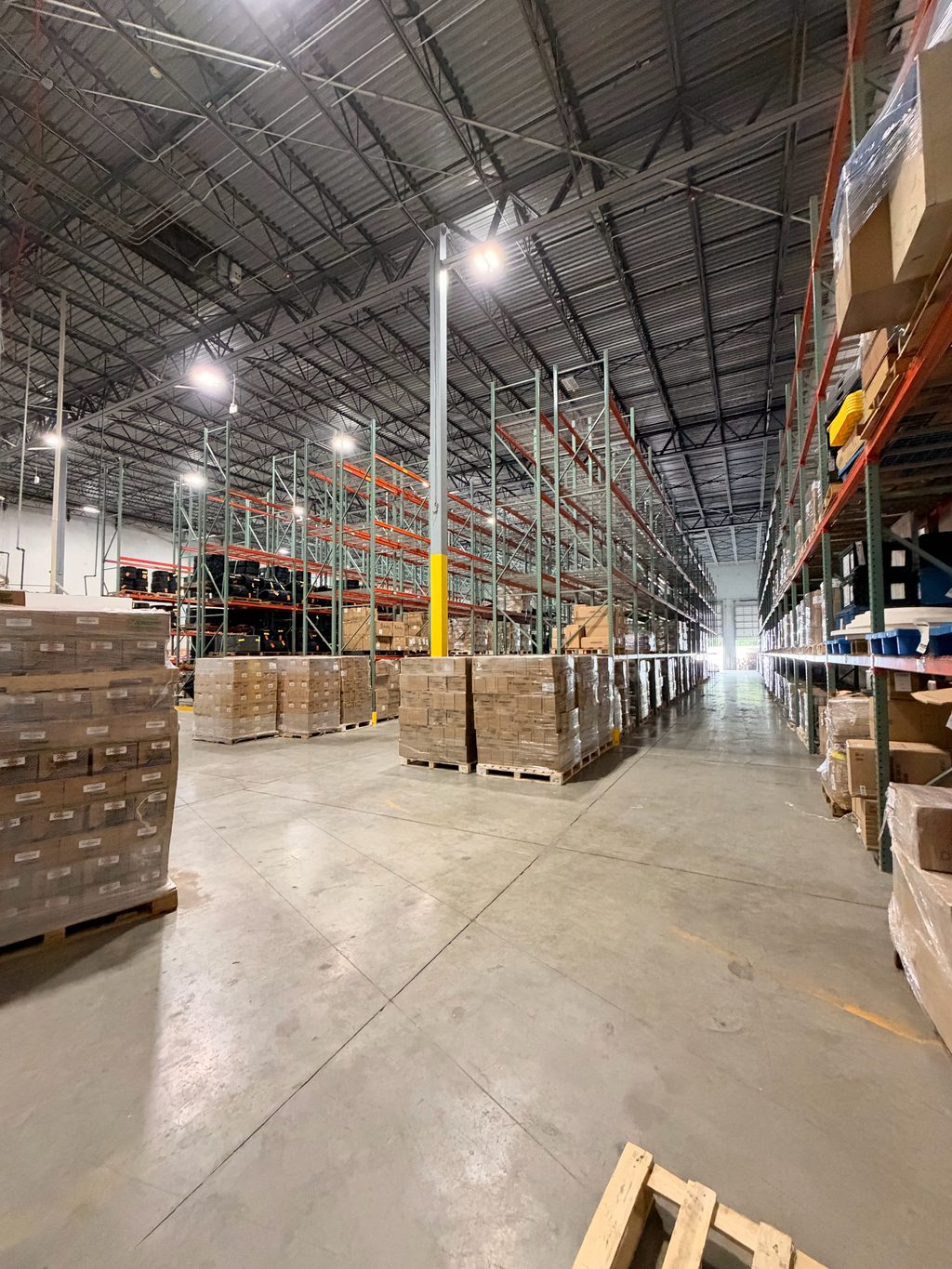
3PL Prime operates from Medley, with 9 dock doors, 1,500 racked pallet positions and additional floor storage space. If you are planning inbound freight to Miami, review our pallet storage, warehouse overflow when a primary site is full, cross-docking and freight staging services, or container devanning for floor-loaded imports. See the Medley facility page. Then send us your inbound details, and we will confirm acceptance, scope and an appointment before you dispatch. For storage costs, see how to compare Miami pallet storage quotes.